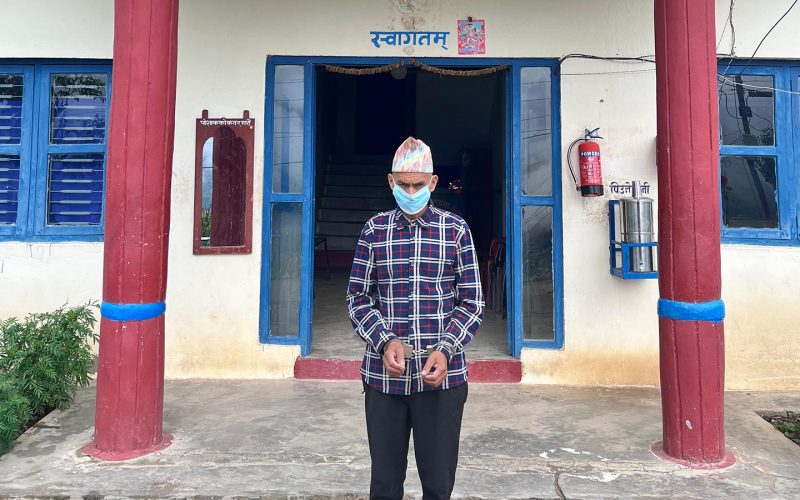

In Nepal, about one-third of the total population still resides in rural areas. According to the National Census 2078 B.S., 33.83% of the total population lives in rural settlements. Out of the total population of 29,164,578, more than 9.9 million people live in rural areas, while over 19.2 million people reside in urban regions.
The term “rural area” encompasses various aspects of society such as social, economic, political, cultural, technological and infrastructural dimensions. In rural regions, population density is low. Basic infrastructure and services such as education, health, transportation and communication are limited compared to urban areas. Most people depend on agriculture, livestock, forest resources, cottage industries and local craftsmanship. People live scattered across wide areas and forests, jungles and farmland are found in abundance. Basic services like hospitals, schools, paved roads and electricity are often inadequate. Agriculture and livestock are the primary livelihoods. Traditional social norms and values are strongly rooted in rural settlements.
Rural areas are generally located far from urban centers and are recognized as village communities. The economy here depends heavily on agriculture, animal husbandry, small industries, household crafts and local skills. Inclusive national development is not possible without improving the rural economy. Therefore, strengthening the rural economy is essential. Strengthening the economic activities in rural regions to make them sustainable and inclusive is the key to improving the livelihood of the people living there. Once the rural economy is empowered, it will not only improve living standards but also reduce unemployment, increase productivity, enhance economic inclusiveness, create jobs, raise income levels, and promote social justice and equality.
The rural economy is based on agriculture, livestock, forest products, soil, stones, forest-based small industries, remittance, handicrafts, tourism and small and medium enterprises. Due to a lack of infrastructure, necessary resources, and difficulty in transporting materials, large industries have not been able to operate in rural areas. The government has also not taken adequate initiatives in this regard. Major financial institutions are still reluctant to invest in rural areas.
There are several challenges to improving the rural economy. These include lack of infrastructure, shortage of human resources, lack of investment, marketing issues, limited technical knowledge, and political instability.
Most people living in rural Nepal are engaged in agriculture and animal husbandry. These are the primary sources of their income. However, agriculture in rural Nepal is still largely traditional. This results in low productivity and insufficient returns for the hard work put in. Irrigation facilities are also lacking in many rural areas. To strengthen the rural economy, there is a great need to modernize and commercialize agriculture. Farmers have not been able to earn returns that match their efforts, leading to growing frustration. Despite this, due to a lack of alternative income opportunities, people are compelled to engage in farming.
Traditional farming methods have failed to provide substantial benefits to farmers. Modernization and commercialization of agriculture require the use of improved seeds, fertilizers, modern tools, irrigation expansion, training for farmers, agricultural insurance, subsidized loans, agricultural education and stable market prices. However, these initiatives have yet to be effectively implemented by the government. Furthermore, the lack of fair prices for agricultural products has prevented farmers from gaining profits from their efforts. To uplift the rural economy, small-scale, cottage and home-based industries that rely on local skills should be promoted. Industries based on woodcraft, clay pottery, forest products, allo (nettle fiber), Dhaka fabric, stones, soil and other raw materials should be developed. Only with strong basic infrastructure-such as roads, electricity, health services, drinking water and communication—can production, services and markets be properly linked with rural settlements. To improve financial access in rural areas, the presence of cooperatives and financial institutions is essential.
It is also necessary to link local cultures, natural resources and religious sites to tourism. This can be done through homestays, trekking routes, cultural preservation, information centers and guide training programs. Local products can be marketed through tourism and village tourism can be developed as a form of green economy.
Since rural areas are also vulnerable to climate change, sustainable and green economic practices are needed. Issues like water conservation, organic farming and forest management must be prioritized. These efforts can be implemented through public-private partnerships. If the rural economy is improved, it can promote economic inclusiveness, create jobs, increase income, reduce migration and establish social justice and equality.
To reform the rural economy, local governments, provincial governments and the federal government must work together. Only when rural development is achieved can inclusive development be truly realized.